Nutritional Advice
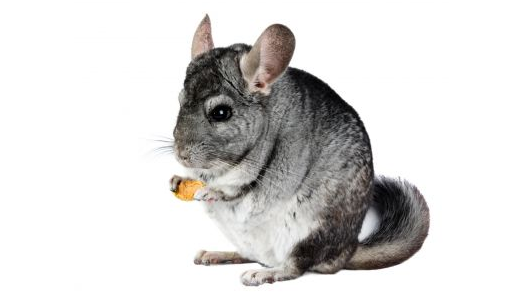
The wild chinchilla lives on a diet of bark, grasses and leaves and has developed a specialized gut which is adapted for this high fibre and coarse diet. The large intestine contains bacteria which break down the grass fibre to make it digestible. The chinchilla passes the fibre through the gut twice to make sure all the nutrients are absorbed. This means that they produce and eat a special kind of faeces (poop) which many owners do not ever see as their chinchilla eats them directly from their bottom. These faeces are dark, sticky and smelly, and are called caecotropes.
Because of this specialised gut and the constantly growing teeth the adult chinchilla needs a high fibre, restricted carbohydrate, restricted protein and virtually no fat diet to stay healthy.
We recommend that the healthy adult chinchilla be given a limited amount of fresh pellets twice a day, each time around ¼ – ½ a flat chinese soup spoon full.
Your chinchilla must have 24 hour access to loose hay (not cubes).
We strongly recommend TIMOTHY hay (first cut, or high fibre). Orchard grass, botanical & mountain hay are also good choices as they are high fibre, low protein hays. Alfalfa hay is too rich, too much protein and calcium.
Check the hay is good quality, it should have a fresh sweet smell and not smell dusty or mouldy. Hay varies in colour according to the weather conditions and can be cream, yellow, green or light brown. As long as it smells fresh and nice the colour is not important. An occasional insect may be found, and this is quite natural, but if it is crawling with insects it should be thrown away.
Be careful where you buy your chinchilla food. Either buy in a busy chinchilla pet shop or from our retail shop. You must buy from a supplier that sells a lot of food to ensure the foods will be fresher. We keep all our hay in air conditioning to ensure it is fresh. We recommend the shop you buy from does the same.
Young (under 6 months), pregnant, sick or old (over 8 years old) chinchillas should be given more pellets. It is best to seek veterinary advice on the exact quantity. They may also be offered a proportion of alfalfa hay as it is a richer hay, with more protein and calcium.
Fresh vegetables: These are a good source of vitamins and water but many chinchillas don’t really like them. If your chin does, then some vegetables are good for their health but too much can upset their guts, so the maximum amount given should just be a couple of pieces a day. Choi Sum, Pak choi, Chinese lettuce, romaine lettuce, carrots, parsley, spinach and yau mak choi are all good choices. Wash thoroughly and make sure they are fresh. Like all new foods, introduce them slowly, start with a little and work up.
Fruit: A few small pieces are acceptable twice a week – perhaps 1/2 a teaspoonful each time.
Biscuits and candies, seeds, oats and nuts are very unhealthy and should NOT be given.
Any diet changes MUST be slow and gentle. Upsetting the gut causes bacterial imbalances that can kill your chinchilla.
Take up to 1 week to introduce a new vegetable or hay or a new brand of pellets.