Health Checks
Kit Health Checks.
Taking on a new kit is an exciting and rewarding experience. There are lots of things to consider with any new pet and our aim is to help you ensure that your new kit has the best start in life and continues to be happy and healthy into adulthood.
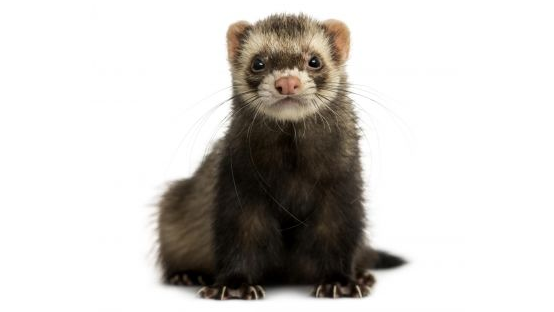
At your first health check, our veterinarian will perform a full physical exam – this involves looking at your ferret’s eyes, nose, ears, mouth and teeth, skin, listening to his heart and lungs, and feeling his abdomen. Our veterinarian will also discuss all aspects of care including feeding, behaviour and training.
We will also cover preventative care such as vaccinations, neutering and parasite control.
As you can see at these kit health checks there is a lot of information to be covered by the veterinarian at this time!
Annual Health Checks.
Regular health check-ups are important for the long term health and welfare of your ferret. Vaccines are important to prevent disease. Ferrets are very susceptible to distemper, which is a common disease in dogs.
Routine examinations allow us to take a pro-active role in preventive health care – we may spot health problems earlier allowing us to take appropriate treatment or preventive action. We can carry out a full physical exam when your ferret comes in for his annual vaccinations. This is an ideal opportunity to discuss any concerns you may have about your pet’s health. The annual health check includes a free urinalysis. Please bring in a fresh urine sample (or one that has been refrigerated) in a clean container, preferably the first sample of the morning.
It is of course possible to perform health examinations at times other than the annual vaccination. We often recommend more frequent check-ups for pets with chronic problems (e.g. heart disease, arthritis). If your pet is on an ongoing medication, then it will require more regular check-ups to allow us to keep prescribing the medication.
Older Ferret Health Checks.
Ferrets are usually considered old or ‘geriatric’ from 3-4 years of age, although for some breeds or individuals, this may be earlier or later. Geriatric pets need more attention than younger pets and it is important that your animal is checked regularly by us in order to detect problems early – we recommend a health check every 6 months for these special ‘old-timers’.
When our elderly pet starts to slow down, we often put this down to ageing changes when in fact it can be due to an underlying medical condition. If detected early these conditions are often treatable and treatment can greatly improve an animal’s quality of life. Some commonly seen problems in older animals include dental disease, arthritis, heart conditions, kidney failure, liver problems.
At the ‘Older Ferrets Health Check’ as well as performing a full physical exam, we may advise a urine test and blood tests as part of the health exam.
Even if the health check reveals nothing untoward the information we gather will help in the future when concerns for your pet’s health are raised. Knowing what is normal for your pet will help immensely when investigating illness.