Health Checks
We recommend a health check shortly after bringing your new pet home.
Bring in details of all foods and any supplements or medicines you may be using and collect samples of urine and faeces from that morning if you can. Take videos of any behaviours that you are worried about or confused by.
Isolate from the rest of your animal family at home (that means do not introduce or let them play together) until after the first check up and the vet has assessed the pet as being healthy.
If you do wish to introduce then please ask us how and when this should be done.
At the ‘Health Check’ we will perform a full physical examination. We will be assessing your new pet’s overall condition, the muscle and fat levels, hydration and checking for anaemia.
We will be paying particular attention for parasites & for signs of any infectious diseases.
We will be focus on the diet, whether is it appropriate and the amounts suitable.
Once we have examined your pet hopefully we will have found nothing seriously wrong, and we will then make whatever recommendations we think are necessary for the diet and care of the pet. If there is time we will talk to you about handling and training as this is the right age to be teaching your pet !
Once your new pet is settled in and any health problems have been solved, then we recommend a yearly general health check.
Please ensure you know the brands of foods your pet is on, and any supplements or long term medications.
Bring urine and faeces from that morning if you can. We would also like to see a photo of the cage set up.
At this check we will assess body condition, muscle and fat levels, hydration and check for anaemia. We will check the eyes, ears and perform a dental examination. We will feel the lymph nodes, palpate the abdomen for any abnormalities and listen to the heart and lungs.
We will search for parasites, and examine the skin, and look for any pressure sores or ‘sore hocks’ on the feet and also assess the nail length.
Once we have examined your pet hopefully we will have found nothing seriously wrong, and we will then make whatever recommendations we think are necessary for the diet and care of your pet.
If our vet does find anything that concerns them they may recommend a general anaesthetic so they can perform radiographs and blood test to help identify any internal problems.
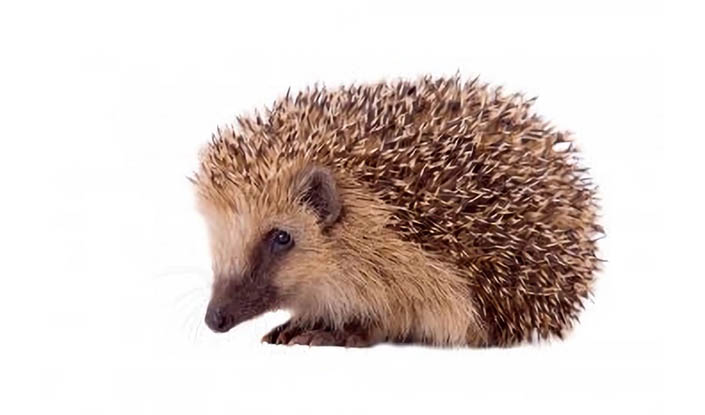
Hedgehogs are quite difficult to examine fully when they are awake !
By the time your Hedgehog reaches four years old we would class them as ‘geriatric’. Hedgehogs are prone to developing a few different types of cancers so our vets always like to try and detect these as early as possible in order for them to be able to help your pet.
At this time depending on your Hedgehogs general condition we may recommend a health check every 6 months.