
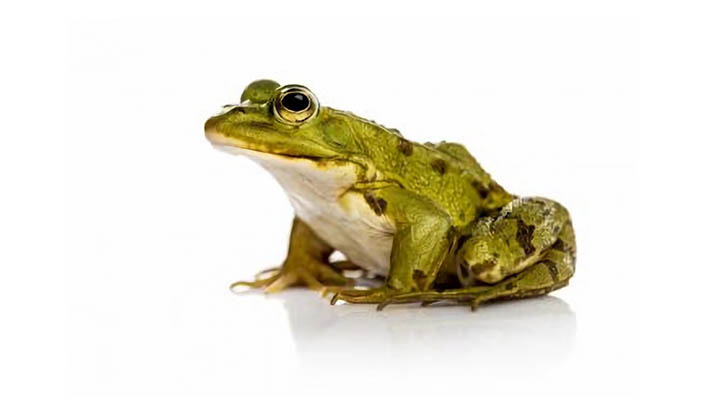
Amphibians
This is a fascinating class of animals which includes frogs, toads, newts and salamanders, and has over 6,000 different species. The species most commonly kept as pets and seen at the clinic include African clawed frogs (Xenopus species), White’s tree frogs (Litoria caerulea ) and Ornate frogs (Ceratophrys species) Many children have kept tadpoles and watched them grow and change into little frogs before setting them free.
An important point to understand about amphibians is that although they are lumped with reptiles as “herptiles”, actually they are not that similar. Generally speaking, amphibians are less tolerant of husbandry problems than reptiles. Amphibians do not tolerate temperature changes well and are very, very sensitive to water balance problems and environmental poisons due to the permeable and sensitive nature of their skin.
CARE
They are not easy pets to keep as their needs are so specific and they generally do best when housed in a natural vivarium or tank based on the natural history of the species.
Ornate frogs can and are often kept in a simple glass bowl but this is not fair to them as it is a very empty and boring environment.
Water quality is very important, and must be clean and free of toxins. As tap water contains chlorine this is not acceptable. Water ph, salinity and water hardness will vary according to the species, as will the temperature and lighting requirements.
Most amphibians are very sensitive to overheating, and they do not like temperatures changing too quickly, most live in rivers and lakes where there is only slow change with the seasons.
DIET
Most species are carnivores and insectivores, and it can be difficult to find appropriate live food especially when they are very small.
They are often quite greedy and will gulp up food which has two problems, firstly they can get far too fat, and secondly they can swallow stones in their enclosure.
HANDLING
It is important to understand that as their skin is so sensitive we can injure them just by touching them, and we should always wear gloves when handling them. The tank should not have rough textures or sharp points as they may injure themselves.
DISEASE
Skin disease is very common due to the very sensitive care and the difficulty of keeping the water quality perfect. It can be very difficult to medicate a slippery frog so the best way to prevent disease is by making sure the husbandry is correct.
SPECIAL CARE
Amphibians and reptiles can both carry the salmonella bacteria in the gut without showing symptoms. Humans, especially children, can become quite sick if infected with this bacteria.