Husbandry Advice
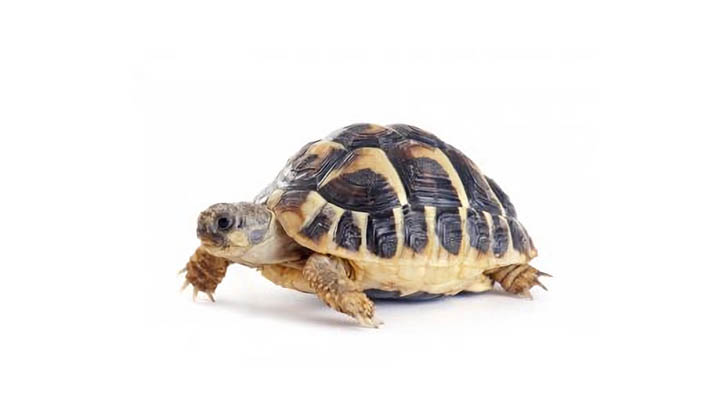
It is very important to correctly identify the species of your pet tortoise in order for you to research and learn how they live in the wild so you can create the best environment possible for them in your own home.
If you are unsure about the species you own please book an appointment and bring your pet in for a health check. During the consultation we may be able to identify it for you, but if not we will take photographs and send them to experts who can help with identification.
As the environment you keep your pet tortoise in is very important to its health our vet will need to ask many details about the tank/enclosure, to make it easier and more accurate please bring in some photographs of your tortoises living environment.
Tortoise Housing:
There are many types of enclosures available to keep your pet tortoise in. In Hong Kong many owners purchase ‘vivariums’ or fish tanks to house their tortoises, unfortunately these are not ideal.
Vivariums:
The glass vivariums often sold by pet shops and reptile shops are not good for housing your pet tortoise for a number of reasons.
Tortoises are from arid environments where the air humidity is low and generally do not do well long term in enclosed environments. Despite the fact that some vivariums have ventilation holes or ventilation mesh at the top, air cannot fully circulate. This may lead to a build-up or reduction of humidity over a long period which may affect the tortoise’s health.
In addition, tortoises do like to roam and the floor space within a vivarium is not large enough for the tortoise to get adequate exercise as it grows.
Vivariums that have higher sides than floor area are best suited to other reptiles which prefer to climb (such as geckos).
Due to the confines and the small floor space of an enclosed vivarium it is generally impossible to provide a proper temperature gradient for your tortoise, this makes proper thermoregulation impossible to achieve and invariably the tortoise will suffer if kept this way for a long time.
Fish Tanks:
With the limited space available in many Hong Kong apartments an appropriate sized fish tank can be adapted to be acceptable while your tortoise is still small, but depending on the size of your tank and the species of tortoise you have they may rapidly outgrow it.
It is important to make sure that the lighting does not overheat or dry out a small tank.
Tortoise Table:
If you have the space the best type of enclosure to keep your tortoise in is a ‘Tortoise Table’. Tortoise tables are generally made out of wood; they have a flat floor, sides high enough to prevent the tortoise climbing out and an open top.
Some of the reptile shops in Mong Kok do now sell ‘tortoise tables’ but it is also easy and cheaper to make one yourself. You may use an old bookcase turned on its back with the shelves taken out or plastic under bed storage boxes. (we would suggest one like “ Billy” bookcases from Ikea such the 80 x 106 cm Ikea number 001.698.24).
If you do use an under bed storage box the sides must be opaque. Tortoises don’t understand the concept of glass or materials they can see through and they will constantly try to ‘walk’ through which can cause undue stress. Therefore it is better to cover the outer sides with material which is not clear (such as cardboard).
Please search on the internet for designs of ‘tortoise tables’ or look under www.tortoisetrust.org
Size of enclosure:
As a general guide, if you use a fish tank it should be a MINIMUM of 6 times the length of your tortoise and at least 3 times the width. Please remember that your cute little juvenile tortoise will grow quickly.
Ideally if you purchase a fish tank to house a new juvenile tortoise it should be at least 30cm wide by 90cm long to allow for some growth of your pet.
If making a ‘Tortoise Table’ the minimum size should be 100cm by 60cm, this is generally suitable for hatchlings and juvenile tortoises.
Adult tortoises should also be kept in an area a minimum of 6 to 10 times their length and 3 to 5 times their width. As most of the commonly kept tortoise species reach an adult size of about 20cm to 30cm this would mean that their enclosure should be 2 m to 3 m long!
This is obviously quite impractical in most Hong Kong apartments so owners need to think about how they are going to house their tortoises once they reach adulthood.
In most cases your adult tortoise will need to be provided with its own room to walk around in or access to a roof of garden.
Please do not purchase a baby African spurred (Geochelone sulcata) tortoise or Aldabra tortoise (Aldabrachelys gigantean) if you are not prepared to move to an apartment with either a roof or ideally a garden.
Substrate/Flooring Material:
There are many options available for the flooring material in your tortoise enclosure. However we recommend using a material which can be fully replaced or cleaned very easily. With full replacement you reduce the ability of parasites to complete their lifecycle this can reduce or eliminate the need for regular de-worming.
In most circumstances paper (newspaper) is a very versatile and useful material as a substrate for tortoises, but still be aware that it does not provide any opportunities to create a humid microclimate.
Also paper materials such as ‘Carefresh’ and ‘Eco Bedding’ can be used but are more expensive.
Timothy Hay is a good substrate which can be found in our shop as well as most rabbit pet shops.
There are number of soils and sands that can be used but care must be taken when using them to make sure they are not ingested as may lead to impactions. It is generally advised to use a play sand/loam mixture but these substrates can be difficult to purchase in Hong Kong. If you would like to provide a soil based substrate please look on the Tortoise Trust web-site for further advise.
Please DO NOT use:
We do not advise using wood shavings as they are very drying, dusty and irritant and again your tortoise may eat them which can lead to impactions.
100% Alfalfa pellets used to be recommended but have been found to be drying, (reducing humidity) and when eaten can cause problems due to the high protein content.
Calci-Sand is prone to clumping, can cause eye irritation, can lead to gut impaction when ingested and is again very drying to your tortoise’s environment.
Fibre-based substrates are generally based upon coconut and similar fibres. It can also be very dusty and if too wet is an ideal substrate for the growth of moulds and bacteria.
Bark chippings/mulch can sometimes be used to replicate a tropical habitat but may include pine or cedar chippings which can be toxic. The mulch is an ideal base for mites and parasites and when ingested is often fatal.
You can make the environment more interesting for your tortoises by adding large flattish stones to allow for some climbing, will help create some microclimates and may help keep your tortoises nails trim. Make sure they are too big to swallow !
Also make sure to add ‘hiding’ areas or dens in different areas of the enclosure, these can either be made of cardboard, wood or plastic. These hiding areas provide your tortoise with some privacy but can also help create a microclimate. Many tortoise enjoy having ‘Eco-bedding’ placed in the hide areas as it then gives them something safe to burrow into.
Water Requirements:
In the wild tortoises generally spend most of their time on land and only normally go near water to drink but some species of tortoises like the Red-footed tortoise of South America (Chelonoidis carbonaria) do actually like to sit in pools of water on hot days.
Even though your desert species tortoise like the African Spurred Tortoise (Geochelone sulcata) only has limited access to water in the wild, it can still control its own ‘microclimate’ through its behavior e.g. digging burrows. Therefore in captivity desert species must still be provided with water and soaked on a regular basis.
Within your tortoise’s environment you should provide a water bowl large enough for your tortoise to climb into. Fill it with water deep enough so that if your tortoise climbs inside it can easily drink but don’t fill it any more than above its nose to prevent your tortoise accidently drowning.
Soaking your Tortoise:
We also advise that you ‘soak’ your tortoise to provide extra water. Many owners ask will ask why? If they have a desert tortoise why do they need to provide it extra water?
The reason tortoise owners need to soak their tortoise is because in the wild tortoises can set up their own microclimate. They do this by burrowing under leaves, hiding in bushes, digging shallow holes, digging deep holes and actually digging underground tunnels which in the case of the African spurred tortoise can be up to 10 feet long. Under the leaves and in the holes the humidity is much higher than the general humidity out in the open.
In a tortoise tank the humidity can become very low due to having to use a heat lamp to provide the high temperatures necessary and there being nowhere your tortoise can go to find an area with higher humidity. This is why it is possible for tortoises kept in captivity to become dehydrated even in Hong Kong’s humid atmosphere. For example a young tortoise, in a small, hot tank, bedded on alfalfa pellets could become dehydrated in less than 24 hours. (This is partially due to its relatively larger surface area to body weight ratio and the drying effect of the heat light, alfalfa pellets and the poor ventilation).
If a tortoise is chronically dehydrated then there are many health problems which may develop, including renal failure, ‘stones’ in their bladders and constipation.
For young tortoises we advise that they MUST be soaked EVERY day to prevent dehydration problems, as well as being in an environment which has some areas with a higher humidity.
On the internet most tortoise advice sites will advise that you only need to soak an adult tortoise once per week, but in our experience here in the Hospital this is often not enough and even with weekly soaking we still see many tortoises develop ‘stones’ in their bladder and need surgery to remove them.
This may be due to the combination of the dehydration, lack of exercise and not enough fiber in the diet.
Therefore we strongly advise that you soak adult tortoises every day, provide as much exercise as possible and make sure they are eating the correct diet!
Temperatures:
Tortoises, like all reptiles, are ‘cold blooded’. This means they do not generate their own body heat and must be provided with external sources of heat in order for them to regulate their own body temperature. To allow your tortoise to effectively regulate its body temperature you need to provide what is called a ‘temperature gradient’. This means that part of the enclosure should be warmer than the rest (the hot spot) so your tortoise can move around to the area where the temperature is correct for its needs at that time of the day. The range should be built around the tortoise’s POTZ (preferred optimal temperature zone.)
Basking in sunlight is the tortoise’s natural source of heat. Equally desert tortoises will dig a burrow, or seek out an area of shelter from the sun to find a cooler area.
As such your tortoise enclosure should be designed with this temperature regulation in mind. There should be a hot area- an area for basking under a high powered light. Depending upon species the temperatures may be quite hot – 32’C or even as high as 38-40’C.
To create the temperature gradient we normally recommend positioning a light bulb or a special ‘heat’ light in one corner or end of the enclosure. The light or heater should have a power rating of >50 watts. This measure of power in watts determines how much electricity is used by the light, and how much energy is finally converted into heat. The higher the power rating the hotter your light or heater will be.
In our Retail Pet Shop we sell lights and heaters of 50, 60, 75, 100 and 125 watts to meet the needs of your pet tortoise.
The exact temperature requirement for your tortoise will depend on the species of your tortoise but in general we recommend a gradient of about 24 C up to 32 C.
Remember that if your tortoise lives in a tank in your apartment do not place its tank close to the air conditioning in order to prevent the air becoming chilled.
Too close to the window may result in overheating on a sunny day.
Lighting:
As well as possibly using a light to provide heat you will also need to provide ultraviolet (UV) light for your tortoise.
Many animals, humans included, need some ultraviolet (UV) light on their skin. This is used by the body to produce and activate some vitamins. For many animals their skin is very sensitive to UV light, and over exposure can cause problems such as burning or even skin cancer. However reptiles such as your tortoise have adapted to bask in strong sunlight for long periods of time, and as such are very resistant to UV light. So for their vitamin activation needs, they need much more UV light.
We cannot see in the UV range, but as with all light there are different wavelengths and different ‘colours’. The UV spectrum is divided into 3 areas. UVA, UVB and UVC.
UVA is the closest to visible light in wavelength and properties. UVC is furthest from our visible range and closer in wavelength and properties to harmful radiation such as X-rays, is dangerous to living animals, and can cause cell damage.
The range required by the skin for activation of vitamins is UVB. This is important as many lights which claim to produce UV light, may only generate UVA.
A proper UVB light is an important addition to the housing setup for your tortoise. There are many different types of UVB light which may state different UVB outputs.
In our Pet Retail Stop we stock UVB fluorescent tubes as well as compact bulbs which emit UVB of different strengths. We also have mercury vapour lamps which produce both heat and UVB.
The UVB light must be positioned within 30 cm of your tortoise for it to absorb enough UVB.
We recommend you change the UVB lights every 6 months to ensure that your tortoise is receiving adequate UVB.
If you have any questions about the equipment you have, or the equipment you need for your pet, please book to see one of our vets. During the consultation please bring along any lights you have already purchased for the vet determine if they are suitable or not.
If you already have a UVB light please bring it along to the consultation, we have a UVB meter which we can use to check the UVB output to make sure it is adequate.
As you can read from above keeping a pet tortoise is not ‘easy’. Frequently owners find that they have to spend just as much money providing the correct environment for their pet as they do on purchasing it.
If you live in an apartment we do not recommend that you keep the larger species of tortoises such as the African spurred tortoise (Geochelone sulcata) or the Aldabra tortoise (Aldabrachelys gigantean). These species need a large amount of space to roam and should only be kept if you can provide them with a large suitable outside area where they can exercise daily.